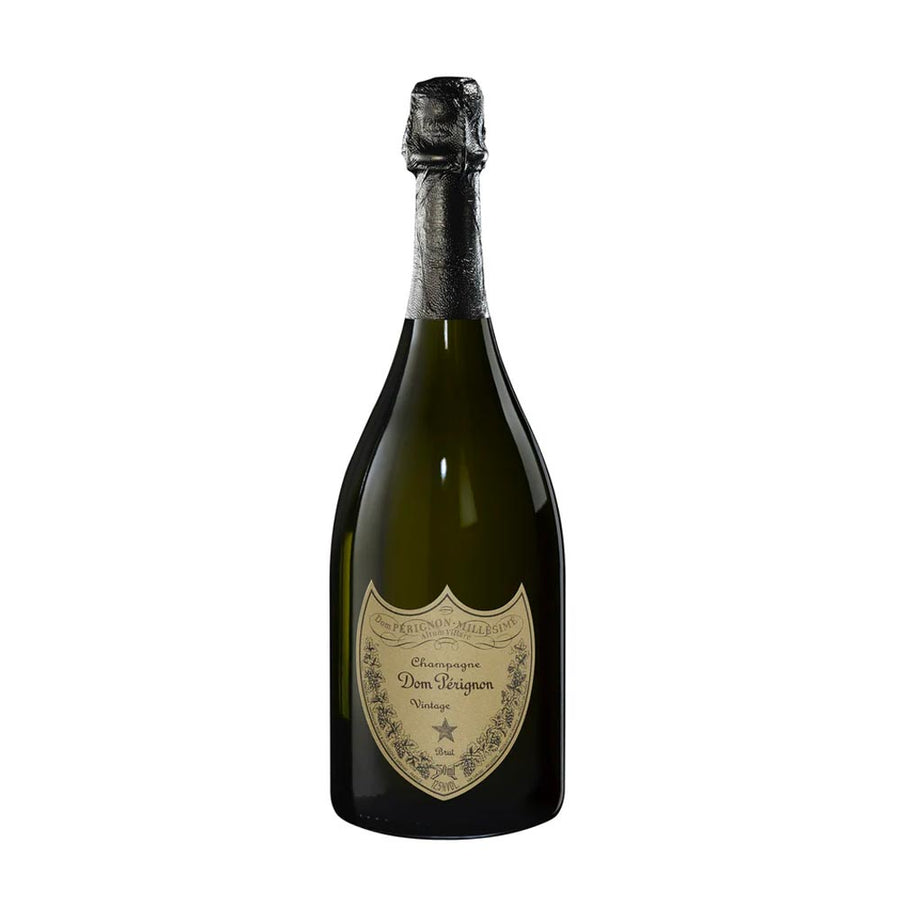
Perrier-Jouët Grand Brut Champagne embodies the heritage of the House of Perrier-Jouët. It perpetuates the house's tradition of brut champagne. It is a harmonious cuvée in which the luminous notes of Chardonnay are perfectly complemented by Champagne's two red grape varieties, Pinot Noir and Pinot Meunier.
A LASTING HERITAGE
The lineage of Perrier-Jouët Grand Brut can be traced back to 1846, when—in response to British connoisseurs' preference for a drier taste—the House of Perrier-Jouët launched its historic Cuvée K, the world's first lightly dosed champagne in the style now known as "brut." According to the house's cellar books, Cuvée K was dosed at less than 5% sugar, a daringly low level for an era when champagnes regularly contained up to 40%. The House of Perrier-Jouët became renowned for its brut champagnes, which it was able to produce thanks to the fact that its high-quality grapes required very little added sugar—a philosophy maintained to this day. Perrier-Jouët Grand Brut is the heir to this tradition and the originator of the famous Perrier-Jouët style. Cellar master Hervé Deschamps selects the finest wines from approximately 50 different crus, expertly blending each cru, as well as a percentage of reserve wines, to replicate the style and quality of the cuvée year after year. The crus are selected based on the House's Chardonnay grape, whose elegance is enhanced in the final, complex blend by the structure of Pinot Noir, predominantly sourced from the northern Montagne de Reims, and the fullness and harmony of Pinot Meunier from the Marne Valley.
CELLAR
Nature as a source of inspiration
Pierre-Nicolas Perrier and Rose-Adélaïde Jouët shared a love of nature and the arts. She was a cultured young woman from a Norman merchant family; he was a masterful winemaker and botanist. A year after their marriage, in 1811, they founded the Maison Perrier-Jouët: born from their desire to create a different kind of Champagne house.
The founders' passion for art, nature, and champagne has been passed down from generation to generation. Their son, Charles Perrier, a botanist like his father, took over the house in 1848. The family philosophy of creative freedom and unconventional observation of nature is intrinsic to the history of champagne. These values continue to shape the Maison Perrier-Jouët today.
A unique legacy
Art Nouveau, inspired by the graceful and sinuous forms of nature, flourished throughout Europe in the late 19th century. The movement's exuberance and creative freedom paved the way for the avant-garde art of the 20th century. The ethos of Art Nouveau was to reinvent nature to re-enchant everyday life.
The Maison Perrier-Jouët's affinity with the Art Nouveau movement is best expressed by the emblematic anemone motif illustrated for the Maison in 1902 by Emile Gallé. Today, the enduring bond




 VINTAGE N/V
  APPELLATION Champagne AOC
 GRAPE VARIETY: Pinot Noir 40%, Pinot Meunier 40%, Chardonnay 20%
 ALCOHOL 12%
 TYPE: Champagne Brut
  PAIRINGS Raw fish, not too structured dishes